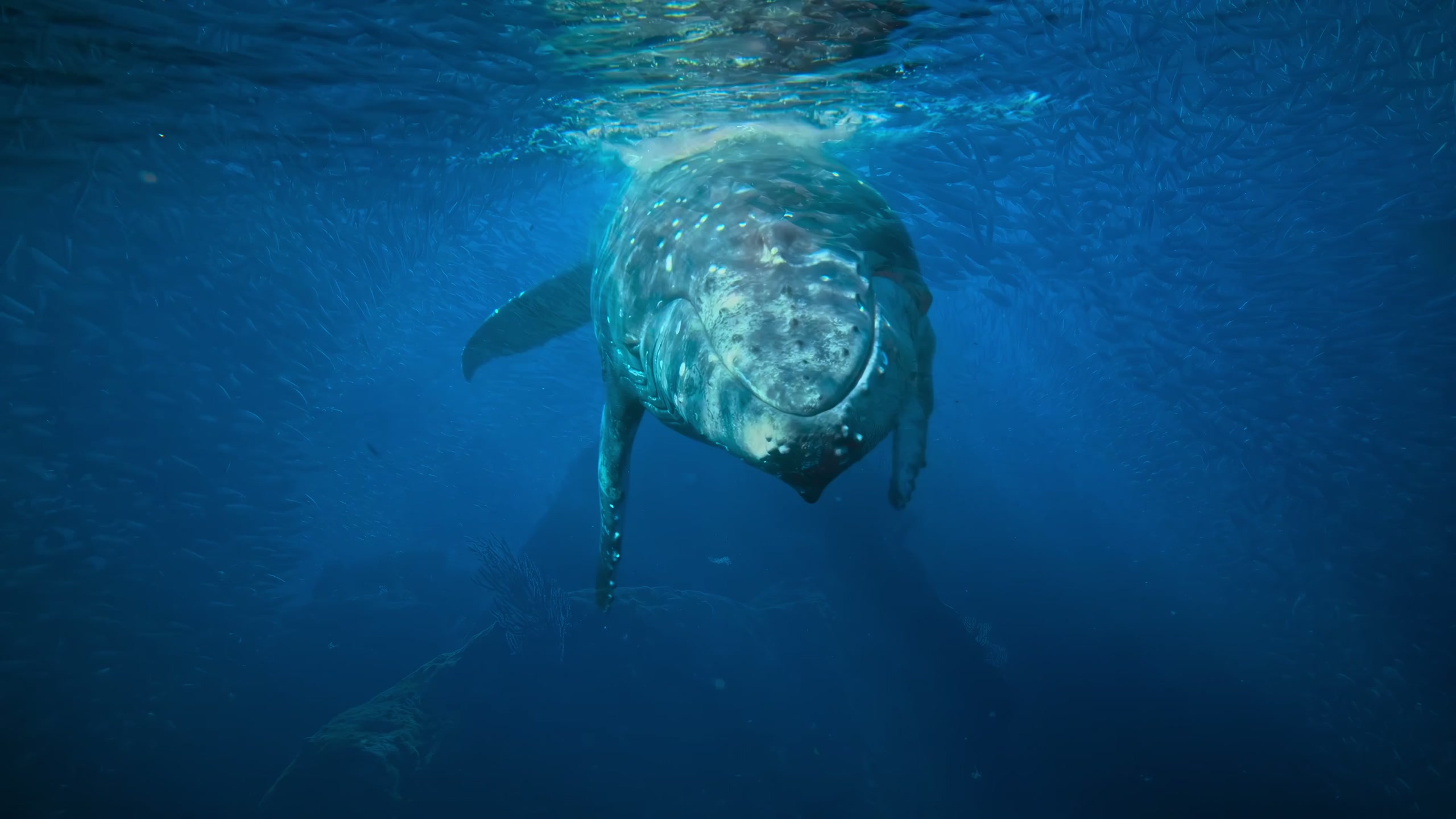
Beneath the waves,
the sea is never silent.
Whales and dolphins fill the deep with songs and whistles. Could a machine learn their shapes — well enough to whistle back?
Red fades first, then gold.
Sound never fades.
A few metres down, the sea drinks the colours one by one. Sound keeps going: four times faster than in air, and farther than any light can reach.
In the open blue,
a name is a whistle.
Some dolphins carry a whistle of their own and turn when they hear it. So we wondered: could a machine learn to hear these voices too?
01 · Listen
Slow a whistle down,
and it rises like a reef.
Spread a recording out over time and pitch, and every whistle rises out of the hiss of the sea like a ridge on the seafloor. Look down on it from above, and it becomes a single line: the whistle’s shape.
02 · Learn
Thousands of voices.
They swim together in schools.
The machine listens to about 63,000 whistles of false killer whales and gives each one a place in its memory. Whistles that sound alike drift together, the way fish gather into schools.
03 · Imagine
Swim between the schools,
and a new voice surfaces.
Pick a place among whistles it knows, and the machine turns it back into a shape, then into sound: a whistle no animal has made, in the voice of the ones that have.
The sea hasn’t changed.
Now you hear it differently.
Your turn to listen. Bring a recording from the deep, or borrow one of ours.